Lately there’s been an explosion on popularity of webhooks and integration with various services I’m using. It’s a great way to develop integration points for services, and we can see this with Office 365 Groups and their Connectors, Slack and their Integrations, Azure Logic Apps Connectors and so on.
You have tools like Fiddler, Advanced REST Client for Chrome and Postman for Chrome which does a great job with analyzing request flows and data on the clients. However, one thing I was missing was the ability to easily (and I mean 1-2-3 easy) analyze and measure the requests my deployed API’s or webhooks were doing. It isn’t always you can analyze it using a client-side analyzer since the request may happen from anywhere and at any time with webhooks, for example.
Requestb.in has been discontinued, and there’s now requestbin.com instead.
Tip: Use Requestbin.com
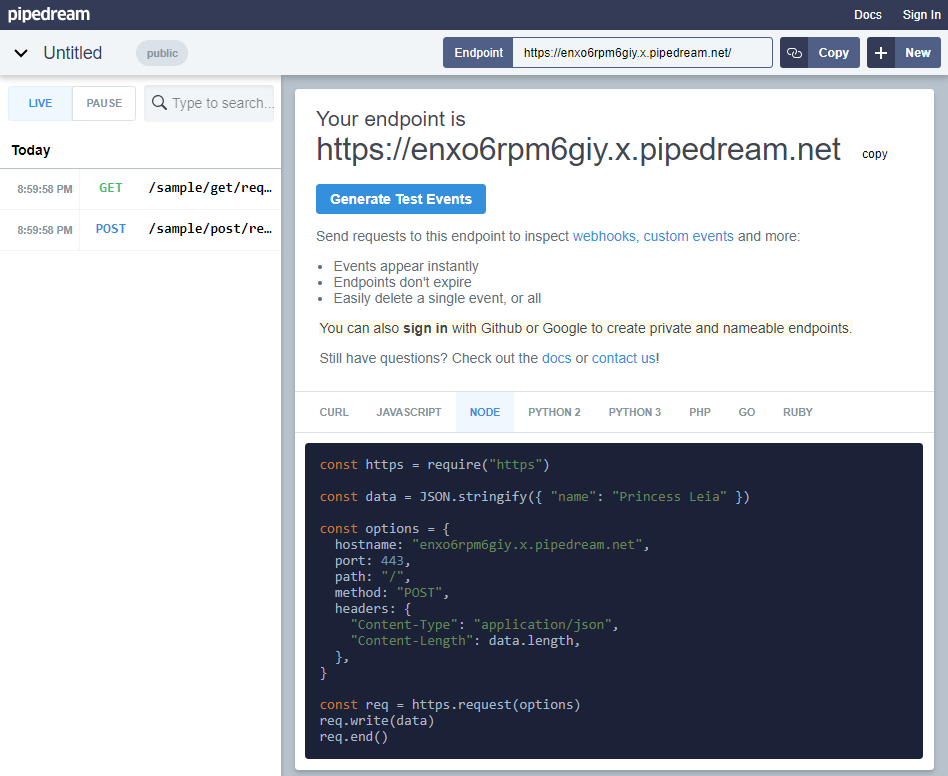
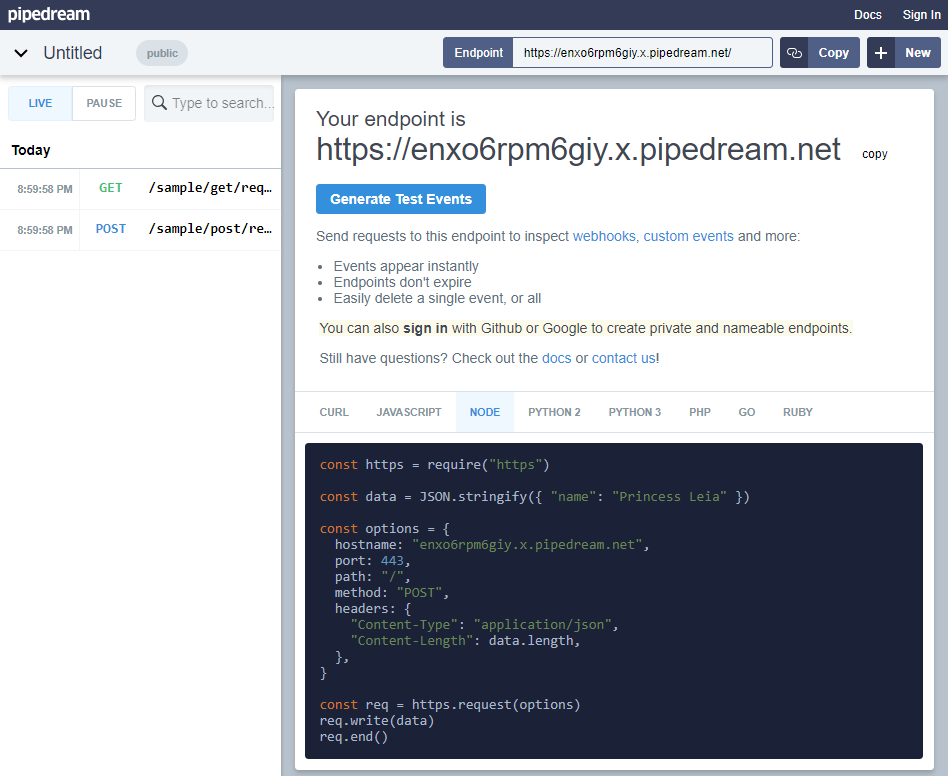
Requestbin.com website
This post has been updated to link to Requestbin.com instead of requestb.in, which apparently doesn’t exist anymore.
With the development of Microsoft Flow, PowerApps, Logic Apps, any other types of API’s - this comes well in handy to accept requests as they happen, and then you’ll be able to dig into them and digest what’s going on; Once you’re happy, you just change the endpoint of your application to the correct one again.
Comments are closed
Archived comments
Hey Tobias, thanks for the shout out! Be sure to check out the fully-featured version we built into Runscope as well: https://www.runscope.com/do...
When you capture requests in Runscope, you can search, share, edit, and even create alerts for specific conditions. Check it out and let us know what you think!
Hi John,
Thanks for the info. I'll check it out next time I do this type of dev.
Tobias.
^ on sharing tools.. I would like also to share PutsReq (http://putsreq.com)
PutsReq is similar to RequestBin, but with the main difference that it allows you to write the response status, head and body using JavaScript.
I'm a huge fan of RequestBin, but I can't use it for testing some Webhooks, as it only returns HTTP 200, body "ok", and some services will fail with that response. PutsReq allows users to programmatically (JavaScript) the responses, so we can fake responses to make those services happy and also for deeper testing by simulating different responses, besides recording the request/response for future inspection.
PutsReq supports recording requests/responses, programmatically responses and forwarding requests to another URL or also to localhost (think of ngrok.io, but without a tunnel). All that in a super intuitive and simple manner.